Schedules change. Client expectations shift. Agency culture can be dynamic — which can be fun, but can also be chaotic and awful. To whatever extent possible, it is the agency owner's job to insulate their workers from that chaos. Sometimes that means financially. Sometimes culturally. But one of the simplest ways it manifests is this: make it easy for people to understand your expectations, and make it easy for them to record time the right way.
One of the fundamental differences we have with most time tracking apps is that we believe time must always be logged in context — where you can see what your assignment was, and what else you're assigned to this week. In Tidy, assigned schedules and timesheets are inextricably linked. Managers communicate their expectations through a scheduling feature where it's easy to apply defaults and make adjustments on the fly. When workers fill out timesheets, they always see what their assignment was and what other engagements they're on.
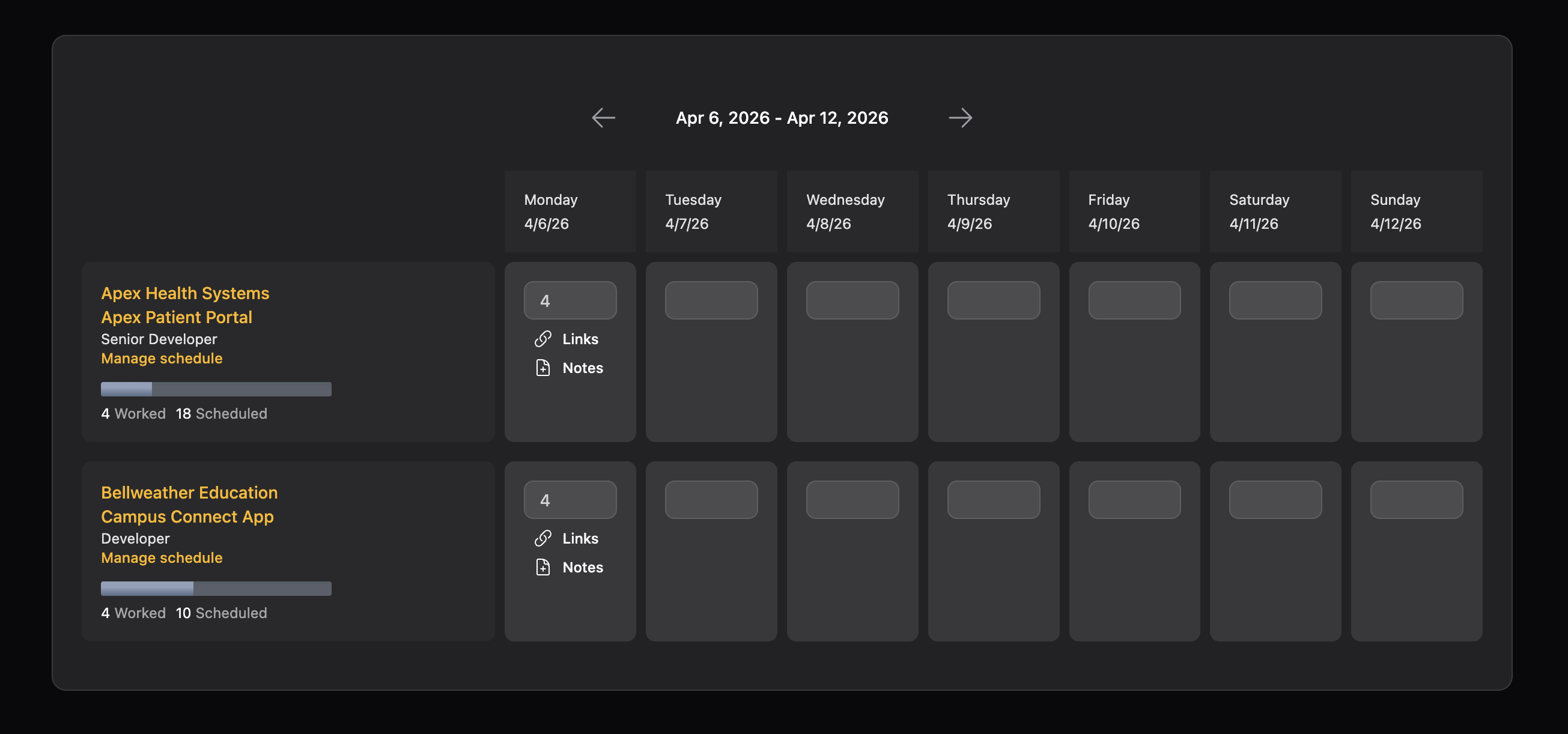
This means the worker's responsibility is simply to do their assignment and confirm their timesheets. It shifts the more ambiguous work — knowing who should be on what — back to the manager.
If all you do is hand workers a blank timesheet, it puts quite a bit of ambiguous stress onto them. It's easy for a manager to say "this is working fine" because they've implicitly made the worker responsible for (1) understanding their assignment, (2) flagging when they're over/under scheduled, (3) tracking changes to the schedule, (4) working and recording their time, and (5) having to answer for it when they over- or under-work because of ambiguity and complexity.
This is the whole reason we started building Tidy in the first place. And even if you don't bill on time and materials, this is still an absolutely critical piece of agency management on the backend. It's a hard problem to solve. Tidy gives managers the tools to sort it out — and makes it easy for workers to do the right thing and get back to value-added client work.